Overview
Generalities
| Agent | Virus: rubella, genus rubullovirus, family Togaviridae. |
| Incubation | NA |
| Period of communicability | Several months after birth |
| Reservoir | Humans. |
| Modes of transmission | -Materno-foetal transmission: 90% of infants born to women infected with rubella during the 1st trimester. The risk of transmission is 10-20% by the 16th week, and rare after the 20th week. |
| Clinical | -Intrauterine death, spontaneous abortion -Congenital malformation: deafness, cataracts, microphtalmia, congenital glaucoma, pigmentary retinopathy, nystagmus, microcephaly, meningo-encephalitis, mental retardation, patent ductus arteious, atrial or ventricular septal defects, other congenital heart disease, purpura, hepatosplenomegaly, jaundice, radiolucent bone disease |
| Worldwide | Worldwide. |
| Lebanon | Rare. |
| Control objective | Control. |
| National figures | |
| One suspected case in 2010. | |
| International figures | |
| Figure 1: Reported CRS worldwide, 2008-2012 (source: WHO) | |
.png) |
|
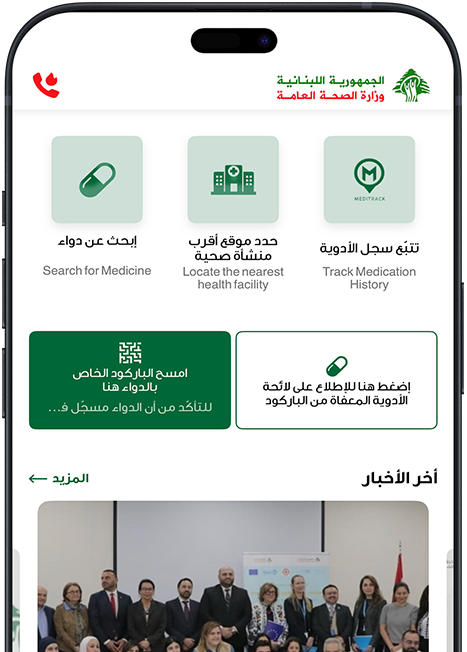
Download the new version of the Ministry of Public Health application and discover new features providing reliable health information
and advanced digital services.
The new version allows you to scan medicine barcodes to verify whether the medication is officially registered with the Ministry of Public Health and distributed through approved official channels, contributing to enhanced patient safety and reducing counterfeit and illegal medicines. In addition to other healthcare services, including:
- Tracking medication records on MediTrack
- Locating the nearest healthcare facility
- Accessing information and statistics on nurseries
- Following the latest health news and updates
The Ministry encourages citizens to rely exclusively on the official application as a trusted source for accurate and reliable health information.