
الاستراتيجية الوطنية للتحصين للأعوام ٢٠١٧-٢٠٢٢
شهد البرنامج الوطني للتحصين تحولات عديدة في السنوات الأخيرة. فقد أُضيفت لقاحات جديدة إلى جدول التطعيم، واستمرت الفئات المستهدفة التي يخدمها القطاع العام في التوسع منذ بداية الأزمة السورية، واتُخذت تدابير لتوحيد ترتيبات شراء اللقاحات، كما جرى تعزيز اليقظة المناعية للقاحات وإدارتها الفعّالة. وفي عام 2016، قررت وزارة الصحة في لبنان أن الوقت قد حان لتقييم الوضع، والبناء على نقاط القوة والإنجازات الحالية للبرنامج الوطني للتحصين، وتحديد المجالات التي تحتاج إلى مزيد من التحسين. وتم وضع استراتيجية للبرنامج الوطني للتحصين للفترة 2016-2020 بالاتفاق مع شركاء التنمية. وبدأ تقييم مفصل للوضع في أكتوبر 2015 على مرحلتين: في المرحلة الأولى، جرى تحليل سياق البلد والنظام الصحي، وقياس أداء نظام التحصين. وفي المرحلة الثانية، وُضع إطار عمل بالتشاور مع أصحاب المصلحة الرئيسيين لتحديد الثغرات في الأدلة. وأُجري مسح لتقييم تغطية التحصين في عام 2016، واستُخدمت نتائجه لسد النقص في المعلومات.
Foreword
There have been many transformations to the NIP inthe recent years. New vaccines wereadded to the vaccination schedule, the cohorts served by the public sector kepton expandingsince the onset of the Syrian crisis, measures to consolidatethe vaccine purchasing arrangements were adopted,and there wasa leveraging up ofthe vaccinovigilanceand its effective management.In 2016, the Ministryof health in Lebanon decided that it was the time to take stock, constructon the current NIP strengthsand achievements andidentify areas for further improvement. A strategy for the NIP for 2016-2020 wasenvisagedin agreementwith the development partners. A detailed situation analysis assessment was initiatedin October 2015 in two stages: at the initial stage, the country and health system contexts were analyzed, and immunization system performance was measured. In the second stage, a framework was developed in consultations with key stakeholders to define gaps in the evidence. Immunization coverage evaluation survey was conducted in 2016 and fed into filling the lacunas in information.
The present document expresses the country vision, goals and priorities of the national immunization program. It relies on a careful examination of the situation analysis, an assessment of the enablers and challenges facing the immunization services and defines the national immunization strategies addressing these contests. The strategies were formulated as informed choices across more than one solution deemed most feasible and efficient considering the country context.
The document is structured in three sections:
Section 1“Situational analysis” presents briefly the organization and operation of the national immunization program as well as the recent achievements and remaining challenges,
Section 2 “Conceptual framework” describes the future vision of the country in regards to vaccine preventable diseases, the long term goals to be achieved and the more specific results –immunization system objectives and targets for 2020,
Section 3 defines the Strategies to address the bottlenecks and achieve immunization system objectives by 2020. Most of strategies (so called “immunization system specific” ones) are presented by relevant health system blocks.The focus of the NIP Strategy, is to assistthe MOPH to meet international goals set by the World Health Organization (WHO) under the Global Immunization Vision and Strategy (GIVS). The Strategy articulates action areas to conserve the successful achievements of the last years, built on the current favoring momentum and propose solutions for the drawbacks
The Strategy comprises nineStrategic Priority Areas to complement and strengthen the NIP.
The matrix (Figure 2) in Annexesshows expected results of the immunization system development strategies by health system building blocks and links them to the root causes (weaknesses and treats) identified during the system analysis...
The present document expresses the country vision, goals and priorities of the national immunization program. It relies on a careful examination of the situation analysis, an assessment of the enablers and challenges facing the immunization services and defines the national immunization strategies addressing these contests. The strategies were formulated as informed choices across more than one solution deemed most feasible and efficient considering the country context.
The document is structured in three sections:
Section 1“Situational analysis” presents briefly the organization and operation of the national immunization program as well as the recent achievements and remaining challenges,
Section 2 “Conceptual framework” describes the future vision of the country in regards to vaccine preventable diseases, the long term goals to be achieved and the more specific results –immunization system objectives and targets for 2020,
Section 3 defines the Strategies to address the bottlenecks and achieve immunization system objectives by 2020. Most of strategies (so called “immunization system specific” ones) are presented by relevant health system blocks.The focus of the NIP Strategy, is to assistthe MOPH to meet international goals set by the World Health Organization (WHO) under the Global Immunization Vision and Strategy (GIVS). The Strategy articulates action areas to conserve the successful achievements of the last years, built on the current favoring momentum and propose solutions for the drawbacks
The Strategy comprises nineStrategic Priority Areas to complement and strengthen the NIP.
The matrix (Figure 2) in Annexesshows expected results of the immunization system development strategies by health system building blocks and links them to the root causes (weaknesses and treats) identified during the system analysis...
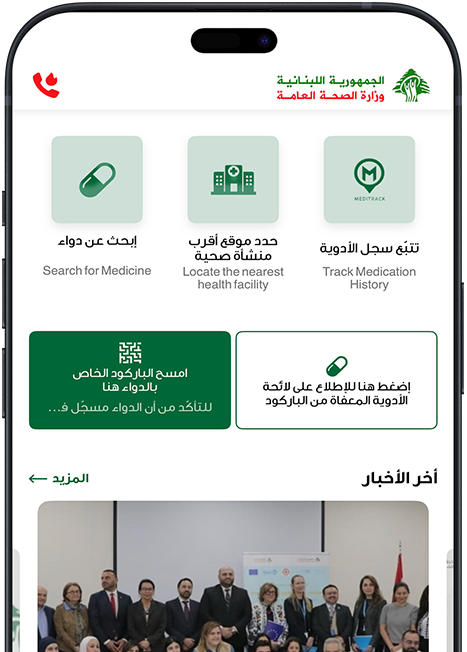
حمّل النسخة الجديدة من تطبيق وزارة الصحة العامة واكتشف المزايا الجديدة
للحصول على معلومات صحية موثوقة وخدمات رقمية متطورة.
تتيح لكم النسخة الجديدة إمكانية مسح الباركود الخاص بالأدوية للتحقق مما إذا كان الدواء مسجّلًا لدى وزارة الصحة العامة ومتداولًا عبر القنوات الرسمية المعتمدة، مما يساهم في تعزيز سلامة المرضى والحدّ من الأدوية المزوّرة وغير الشرعية. بالإضافة إلى خدمات صحّية أخرى تشمل:
- متابعة سجلّ الأدوية على MediTrack
- تحديد أقرب منشأة صحّية
- معلومات وإحصاءات عن دور الحضانة
- آخر الأخبار والمستجدّات الصحية
وتدعو الوزارة إلى اعتماد التطبيق الرسمي فقط كمصدر موثوق للمعلومات الصحية.